What really keeps us holding on to something that stopped giving us anything long ago
So far this series has mostly been about the moment we judge. This time it is about something even harder to let go of: the past. Why we hold on to things that stopped giving us anything long ago, simply because we have already put so much in, and why the reason is rarely the one we tell ourselves.
„Life can only be understood backwards; but it must be lived forwards.“
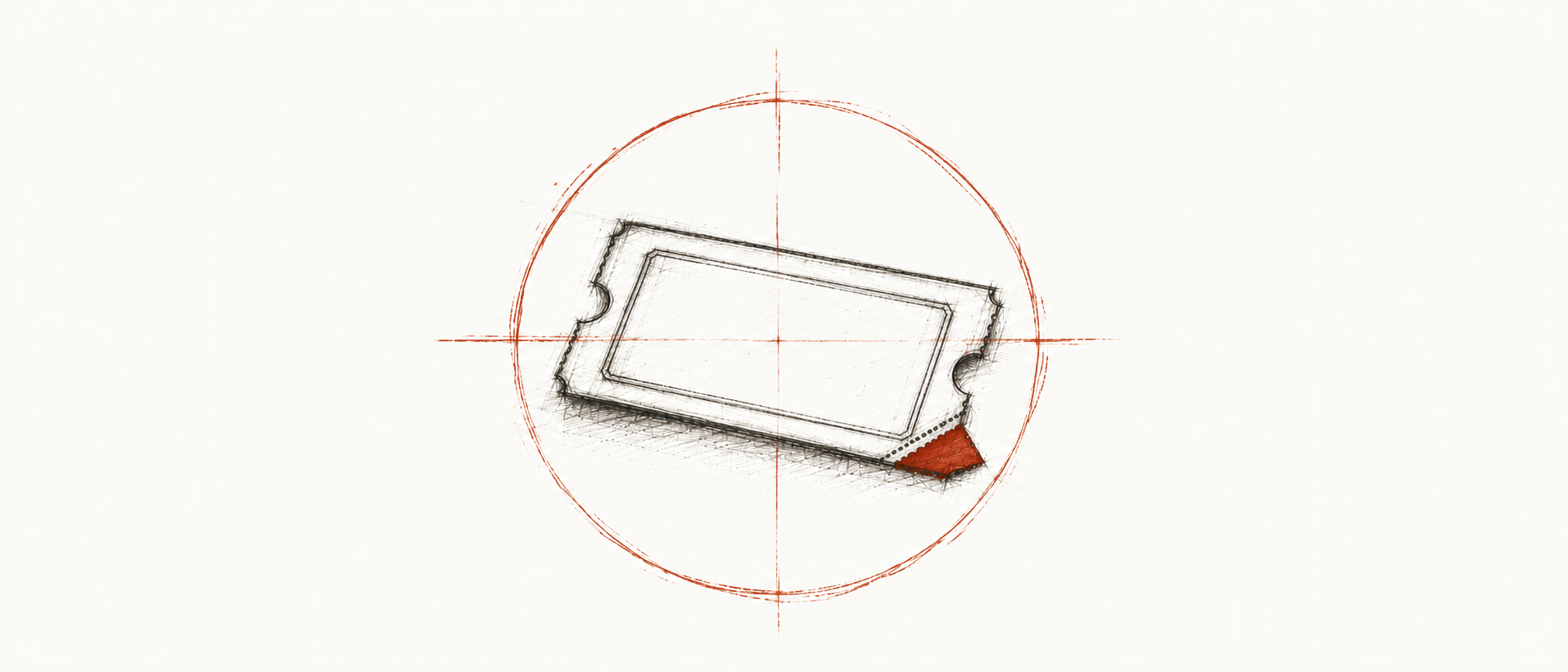
The film is bad. Half an hour in, it is clear it will not get any better. The characters stay flat, the plot drags, and still I keep sitting there. After all, I have already put in half an hour, and besides, maybe something is still coming. But nothing comes. In the end I have lost two hours instead of one, and my only gain is the stubborn satisfaction of having seen it through.
On its own that is harmless, a wasted evening. But the same thing shows up in the big decisions. The degree that has not fitted since the third semester, but… you do not drop out now! The project so much money has already gone into that quitting feels like a defeat, so you would rather put in a bit more (it is bound to pay off). The expensive device you keep using even though a better one has long been available, because it did after all cost money. And you can watch it happen in relationships too, now and then, when you stay friends with someone even though they are not good for you, simply because you have been friends for so long.
Why we throw good money after bad
In economics the core of this has long had a sober name, the sunk cost fallacy. These sunk costs are everything that has already cost us something and that we cannot get back, like money, time or effort. Our clear head would say that the costs we have already put in should not count, they are gone whatever I decide. What should count is only what the future brings, whether it is another hour of film, the next year of study or the next euro in the project. Yet in this respect our perception is anything but clear and rational, a plain cognitive bias.
Two psychologists, Hal Arkes and Catherine Blumer, put their finger on this in the mid-eighties. Imagine you have accidentally booked two ski weekends, an expensive one and a cheaper one, and both fall on the same date. Neither can be refunded. You know you would actually enjoy the cheaper one more. And yet a good half of people go on the expensive trip, because the higher price pulls, you have already paid it after all, even though it does nothing for the weekend itself. We throw, as the saying goes, good money after bad.
It is not about the money
Treated as a pure sum, the case would be easy. The puzzle is why we get it wrong so reliably, even though we understand it perfectly on a logical level. The real reason is not in the arithmetic, because what holds us is not the money, which is gone anyway. It is what getting out would say about us.
Whoever stops the film, drops the degree, buries the project has to say a sentence no one likes to say. That was for nothing, I was wrong.
Carrying on spares us that sentence. As long as it continues, nothing is finally lost yet, the verdict is postponed. The loss only becomes real the moment I close it off. So I do not close it off and pay for the delay with even more time, more money, more years. It is the same thing we ran into a few weeks ago, where we found that we defend a judgement instead of testing it. Only here we are defending a judgement from the past, and we are defending it against our own better knowledge. In the end we are not attached to the thing itself, we are attached to the picture of ourselves that would fall with it.
Perseverance or fear of the reckoning
By this I certainly do not mean, quit everything the moment it gets hard. That is the opposite mistake and it is just as costly. Some perseverance is not a trap but loyalty, the decision to see the hard thing through, to keep a promise and to walk through the dry stretch that gets better on the other side. The difference is not how much we have already put in, but where our gaze is pointed. Am I holding on because something ahead of me is worth the way? Or am I holding on because too much lies behind me to admit? The first is perseverance, the second is fear of the reckoning.
There is one question that makes the difference fairly reliably visible. Not "How much have I already put in?" but "If I could decide fresh today, without the past, with everything I now know, would I get in again?" If the honest answer is no, then it is not the thing itself that holds me but the admission I do not want to face. The two hours of film I will not get back anyway. The third one I do not have to add on top.
For the week ahead
This week, pick one thing you are holding on to and secretly suspect is no longer worth it. It could be a subscription, a project, a habit, a device. Then ask yourself the one question: "If I could decide today, without everything already invested, would I get in again?" You do not have to act straight away. Just answer honestly and notice what the mere thought of stopping stirs in you.
Three questions to carry with you.
Am I holding on because something ahead of me is worth it, or because too much lies behind me to admit?
Would I, with everything I now know, get in again today?
What does carrying on protect me from, which sentence does it spare me?
Enjoy the thinking, and see you next week.
— Luc
-
Arkes, H. R., & Blumer, C. (1985). The psychology of sunk cost. Organizational Behavior and Human Decision Processes, 35(1), 124–140.
Kahneman, D., & Tversky, A. (1979). Prospect theory: An analysis of decision under risk. Econometrica, 47(2), 263–291.
Staw, B. M. (1976). Knee-deep in the big muddy: A study of escalating commitment to a chosen course of action. Organizational Behavior and Human Performance, 16(1), 27–44.
Subscribe to my newsletter and get my essays straight to your inbox.
Reflection starts with dialogue.
If you’d like to share a thought or question, you can write to me at contact@lucalbrecht.com
Thinking from Scratch
by Luc Albrecht
Exploring how we think, decide and create clarity