Why we suffer longer in our memories than in reality
How the end of an experience determines how we make our next decision.
„We suffer more often from our imagination than from reality.“
A visit to the dentist
A very good friend of mine is a dentist, and a good one at that. No doubt he’ll smile a little at what I’m going to write today. Before I begin, however, I must admit that my experience of dentists has been very positive, as my father was also the sort who made a visit almost pleasant. So I’ve had nothing but positive experiences and remember above all the Mickey Mouse comics I was always allowed to read at the dentist´s office back then. Nevertheless, I know, of course, that many people feel differently.
You’re sitting at the dentist’s; nothing exciting has happened for an hour, and even though the experience of having someone else’s fingers and metal instruments in your mouth isn’t exactly pleasant, it’s at least bearable for a while. The suction device is slurping away, it tastes of plastic, and you’re asked if you could open your mouth a little wider. The dentist chats to you, you respond using the vocabulary of a seal.
But then a sharp pain shoots through your tooth and you flinch. You feel a rush of warmth. The dentist apologises, then carries on with the treatment, and a short while later it’s over.
At reception, when you’re booking your next appointment, you’re asked if everything was all right. You think for a moment and that one second immediately comes to mind. Your reply: “It was rather unpleasant.”
The remaining 59 minutes no longer matter at this moment. Of course they happened, but right now they carry no weight.
What sticks in the mind
Let’s take a look at this phenomenon in the lab.
As early as 1993, Daniel Kahneman and his colleagues investigated how students assessed unpleasant experiences in retrospect. To do this, they had 32 participants (all male) immerse their hands in uncomfortably cold water.
In the first trial, the hands remained in water at exactly 14 degrees for 60 seconds.
In the second trial, the participants initially kept their hands in water at exactly 14 degrees for 60 seconds as well, but then had to remain in the water for a further 30 seconds whilst the water was heated by exactly one degree.
One degree warmer. Still unpleasant, but not quite as bad as before.
So the second trial basically consisted of trial 1 plus half a minute of additional cold pain.
However, when the participants were then asked which of the two trials they would repeat, 22 of the 32 participants opted for the longer trial. One of the participants even remarked: “The choice I made doesn’t really make any sense”.
What I personally find remarkable about this experiment is that the participants knew exactly which trial had caused them to suffer for longer, yet this knowledge seemed to play hardly any part in their decision. Their judgement was based on two moments: the most unpleasant point and the end of the experience.
Because the longer trial ends less badly, this experience carries more weight in the decision than the 30 extra seconds of pain.
Two Selves, One Body
Daniel Kahneman later distinguished between two forms of the self:
The experiencing self – the self that is present in the moment itself – feels every single second, every twinge, every moment of waiting and every sense of relief. It is, so to speak, entirely in the here and now.
The remembering self, on the other hand, condenses this time into a narrative and focuses primarily on particularly striking features (salience). One might say that, for this form of the self, some minutes count for more than others, it weighs them up. It decides in retrospect whether the treatment was unpleasant, whether the journey was enjoyable, whether the conversation was worthwhile, and whether we should do something similar again.
This is particularly evident in the case of brief and clearly defined painful experiences. This was investigated further in a 1996 study which continuously asked patients undergoing colonoscopies and kidney stone treatments to rate the intensity of their pain. Although the procedures varied in length, meaning that some patients objectively suffered for longer than others, the subsequent assessment was more strongly influenced by the most intense pain and the pain experienced in the final minute. Thus, it was not the entire experience that shaped the memory, but merely the peak and the end of the experience.
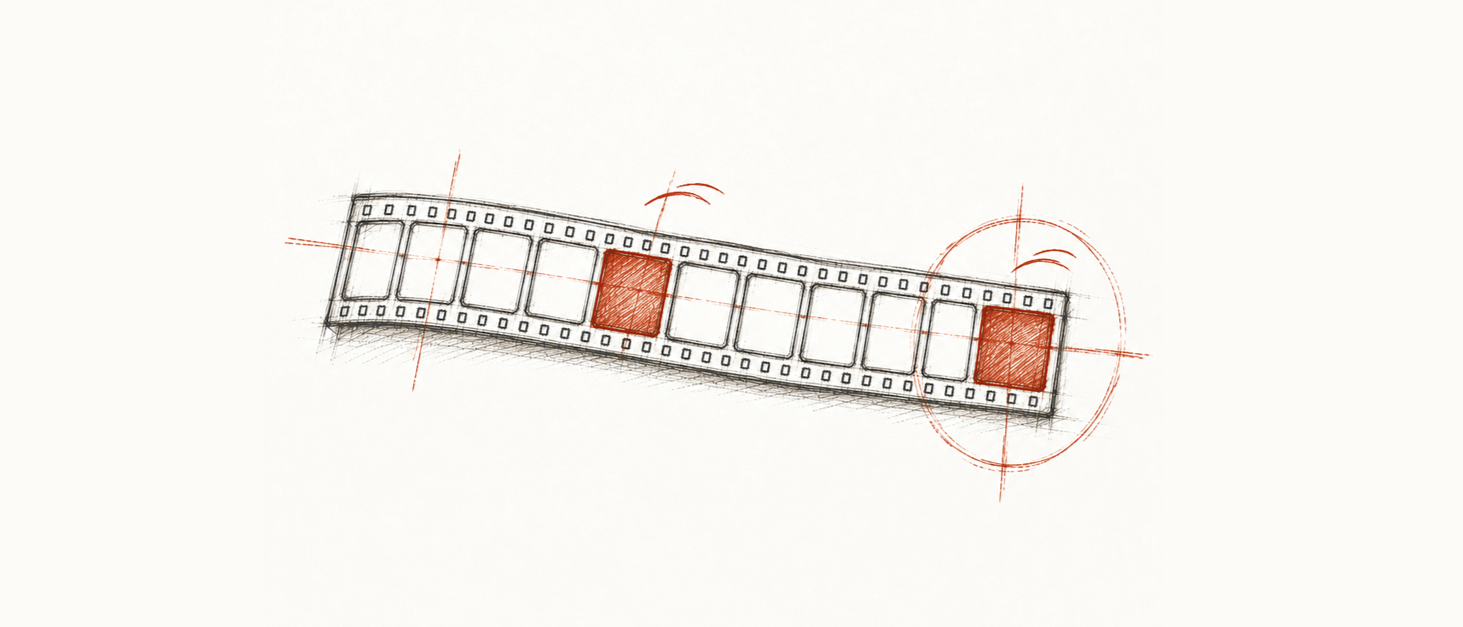
This effect is also known as the peak-end rule: in retrospect, experiences are not replayed as a complete recording, but are remembered as a heavily condensed version in which the most intense moment and the end are given disproportionate weight.
The uncomfortable question
In 2003, researchers Donald Redelmeier, Joel Katz and Daniel Kahneman deliberately sought to exploit this effect during colonoscopies. In a randomised study involving 682 patients, the end of the procedure was artificially prolonged for some of the patients by leaving the tip of the endoscope in place for a short time without any further examination taking place. Although this made the procedure longer and meant patients had to endure more discomfort, their recollection of the procedure was more positive because the final moments were consequently less unpleasant than the actual examination. As a result, the ‘remembering self’ was left with the better story, even though the ‘experiencing self’ had to pay the price.
It is precisely here, however, that the psychological effect becomes an ethical question:
Is an experience better if it feels better afterwards? Or is it worse because the actual suffering was artificially prolonged?
Unfortunately, there is no neutral authority to resolve this conflict for us, because when we later decide whether to repeat an experience, the experiencing self is no longer present.
Perhaps that is why we book the same holiday again, even though we were bored for the week before, simply because the last two days were particularly lovely. Or we go back to the free-fall tower because the moment when you successfully open the seat and laugh about it with friends, your legs still wobbly, overrides the panic felt at the highest point. Or perhaps we avoid a place, a person or an activity because a single moment ultimately overshadowed everything that happened before.
However, a small caveat is in order here, as the peak-end rule is not a universal law applying to every kind of memory, rather, it is particularly evident in short, distinct and relatively uniform experiences with a clear climax and a recognisable end. In the case of longer, more varied periods of life, however, the situation is considerably more complex.
Simon Kemp and his colleagues also investigated this using holidays lasting several days. Here, too, the duration had little influence on the subsequent evaluation, however, the most intense moment and the end explained the judgement far less reliably than in the pain experiments.
A holiday is not like putting a hand in cold water or a visit to the dentist, it is more complex and consists of many different episodes, expectations and subsequent narratives. Reducing such long periods to just two measurement points would therefore be somewhat too broad an approach.
Nevertheless, the underlying idea remains striking: our memory does not count time and experiences equally.
The Lost Hours
Perhaps the bigger problem here is not that unhappy endings spoil our memories, but rather that long, quiet periods leave hardly any impression at all. They are often perceived as boring, yet there is also something soothing about them. An afternoon when nothing special happens, a dinner that was neither exceptionally good nor bad, an hour on the sofa, or a walk without a scenic viewpoint, a photo or a surprising realisation.
For our experiencing self, all these moments can be lovely and pleasant, for our remembering self, however, they contain hardly any material. We then recall these ‘lovely, relaxed moments’ only vaguely. No climax, no punchline, no powerful ending. They were there, yet later on almost nothing remains of them.
It is important to note, however, that this does not render that time worthless. Indeed, perhaps the opposite is true. Yet it derives its value in a different way, namely, in the moment itself, when experienced consciously. If duration counts for little in life, the moment in the here and now counts for more.
The remembering self asks: ‘What remains of it?’
The experiencing self would ask: ‘What was it like when it happened?’
-
At the dentist’s reception, you still think of that one brief moment, the prick. You’re not lying when you say you found the treatment unpleasant, because your memory isn’t making it up. It has simply excluded a great many other minutes from its assessment.
Perhaps the more honest answer should therefore be:
‘One second was pretty bad. The rest, not really.’
For the week ahead
This week, set yourself the task of having an experience that you would normally describe as boring or run-of-the-mill.
No photos, no messages about it, no embellishing in your mind about how you might recount it later.
It could be a walk, a meal, a train journey or half an hour on a park bench.
Just notice what it’s like to experience that time, which may not make for a good memory, but which is allowed to be lovely in the moment itself.
Three questions
Which two moments shape my judgement of a past experience, and how much time does my memory skip over?
Is my decision right now shaped by the ‘self’ that remembers something, or the ‘self’ that experienced it?
What routines or moments in my life are long, quiet and will leave hardly any mark – and would that actually be a bad thing?
I hope you enjoy reflecting on this, and see you next week.
— Luc
-
Fredrickson, B. L., & Kahneman, D. (1993). Duration neglect in retrospective evaluations of affective episodes. Journal of Personality and Social Psychology, 65(1), 45–55. https://doi.org/10.1037/0022-3514.65.1.45
Kahneman, D. (2012). Schnelles Denken, langsames Denken. Random House GmbH.
Kahneman, D., Fredrickson, B. L., Schreiber, C. A., & Redelmeier, D. A. (1993). When More Pain Is Preferred to Less: Adding a Better End. Psychological Science, 4(6), 401–405.
Kemp, S., Burt, C. D. B., & Furneaux, L. (2008). A test of the peak-end rule with extended autobiographical events. Memory & Cognition, 36(1), 132–138. https://doi.org/10.3758/MC.36.1.132
Redelmeier, D. A., & Kahneman, D. (1996). Patients’ memories of painful medical treatments: Real-time and retrospective evaluations of two minimally invasive procedures. Pain, 66(1), 3–8. https://doi.org/10.1016/0304-3959(96)02994-6
Redelmeier, D. A., Katz, J., & Kahneman, D. (2003). Memories of colonoscopy: A randomized trial. Pain, 104(1), 187–194. https://doi.org/10.1016/S0304-3959(03)00003-4
Subscribe to my newsletter and get my essays straight to your inbox.
Reflection starts with dialogue.
If you’d like to share a thought or question, you can write to me at contact@lucalbrecht.com
Thinking from Scratch
by Luc Albrecht
Exploring how we think, decide and create clarity